
Knowledge · Valves & Fittings
Low-lead brass: what changes for the cutting tool
For decades, brass for valves and fittings contained around 2 to 3.5% lead, which made it one of the easiest metals to machine. Drinking water rules in Europe and the USA are pushing that lead out. Low-lead and lead-free brasses are safer, but they behave differently on the machine. This guide explains what changes for the cutting tool, and how to keep a good finish.
Why the lead is going
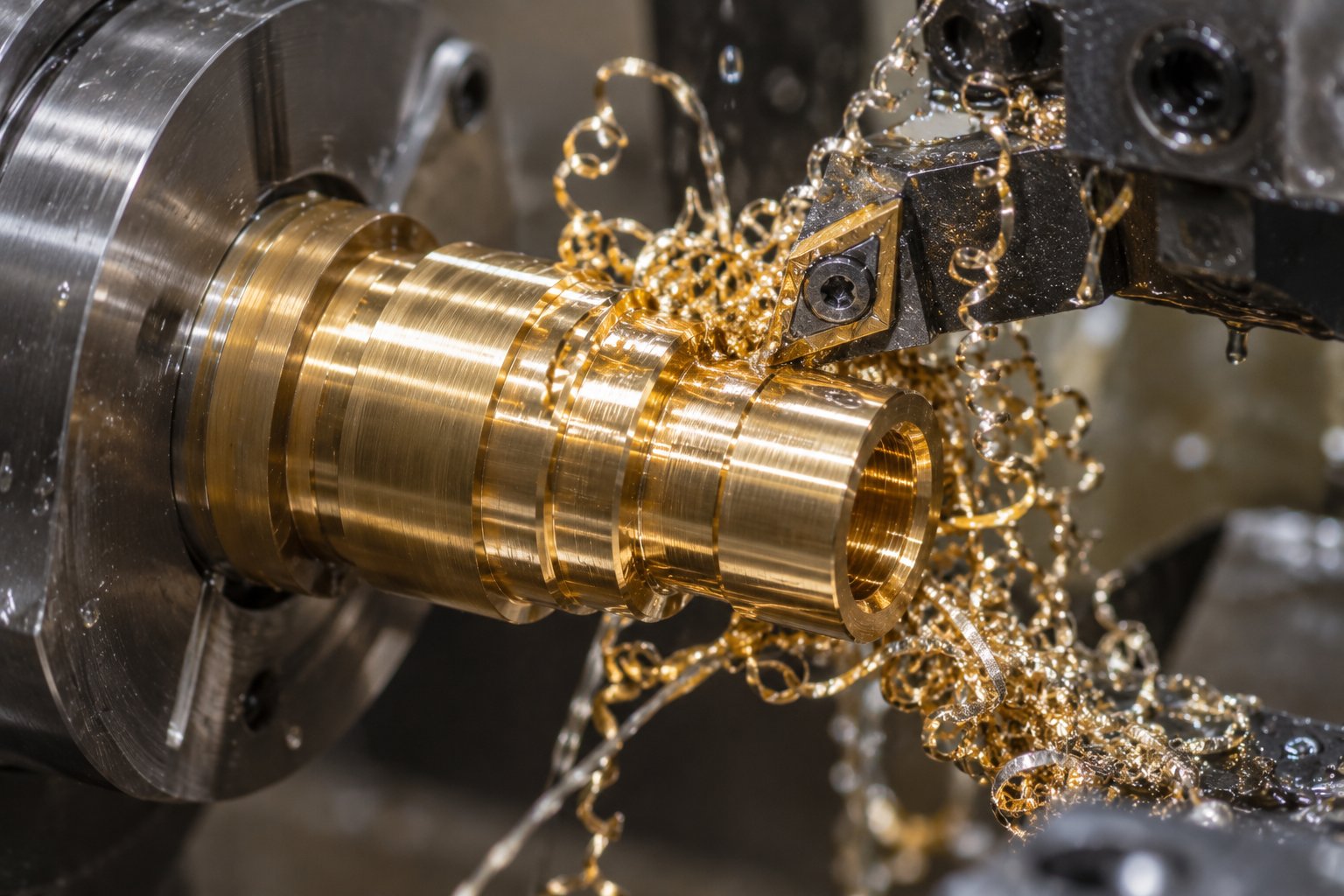
Lead was added to brass for one reason: machinability. Classic free-cutting brass, such as CuZn39Pb3 (CW614N, C36000 in the USA), contains about 2.5 to 3.5% lead. The lead sits in the metal as tiny soft particles that break the chips and lubricate the cut. That made brass the easiest metal for fast, cheap turning of valves and fittings.
Lead in drinking water is a health risk, though, and the rules have tightened:
- USA: since 2014, plumbing products in contact with drinking water must be "lead-free", meaning no more than 0.25% lead on a weighted average of the wetted surfaces.
- Europe: the Drinking Water Directive and the lists of approved materials for drinking water contact set limits on lead in brass, and several countries already require low-lead alloys.
As a result, makers of valves, taps and fittings are moving to new alloys, and their machining shops have to adapt.
The new alloys
| Alloy type | Examples | How it machines |
|---|---|---|
| Classic free-cutting brass | CuZn39Pb3 (CW614N), C36000 | Easiest: short chips, low wear |
| Silicon brass | CuZn21Si3P (CW724R) | Harder, more abrasive, higher tool wear; chips break reasonably |
| Lead-free brass | CuZn42 (CW510L), CuZn40 | Long, tough chips, more heat |
| Low-lead dezincification-resistant brass | CuZn38As (CW511L) | Long chips, needs chip control |
Every alloy is a compromise. Some are closer to classic brass in machining, others are better for strength or corrosion. Check which one your customer or your standard requires before choosing tools.
What changes on the machine
- Longer chips. Without lead, chips no longer break into small pieces by themselves. They curl, tangle and wrap around the part and the tool.
- Higher forces and heat. The metal resists the cut more. More heat goes into the tool edge and the part.
- Faster tool wear. Silicon brass in particular contains hard particles that wear the cutting edge like a fine abrasive.
- Harder to finish. Long chips scratch bright surfaces, and a worn edge tears the metal instead of cutting it cleanly. Parts that came off the machine bright in classic brass may now need polishing.
What to change on the tool
- Use chip-forming geometries for roughing. Carbide inserts with chip breakers made for long-chipping materials keep chips short.
- Adjust feed and depth of cut so the chip has enough thickness to break. Very light cuts on lead-free brass often make the longest chips.
- Increase coolant pressure and flow to cool the edge and flush chips away from the part.
- Keep edges sharp. A worn edge on lead-free brass smears and tears. Change or resharpen tools earlier than you did on classic brass.
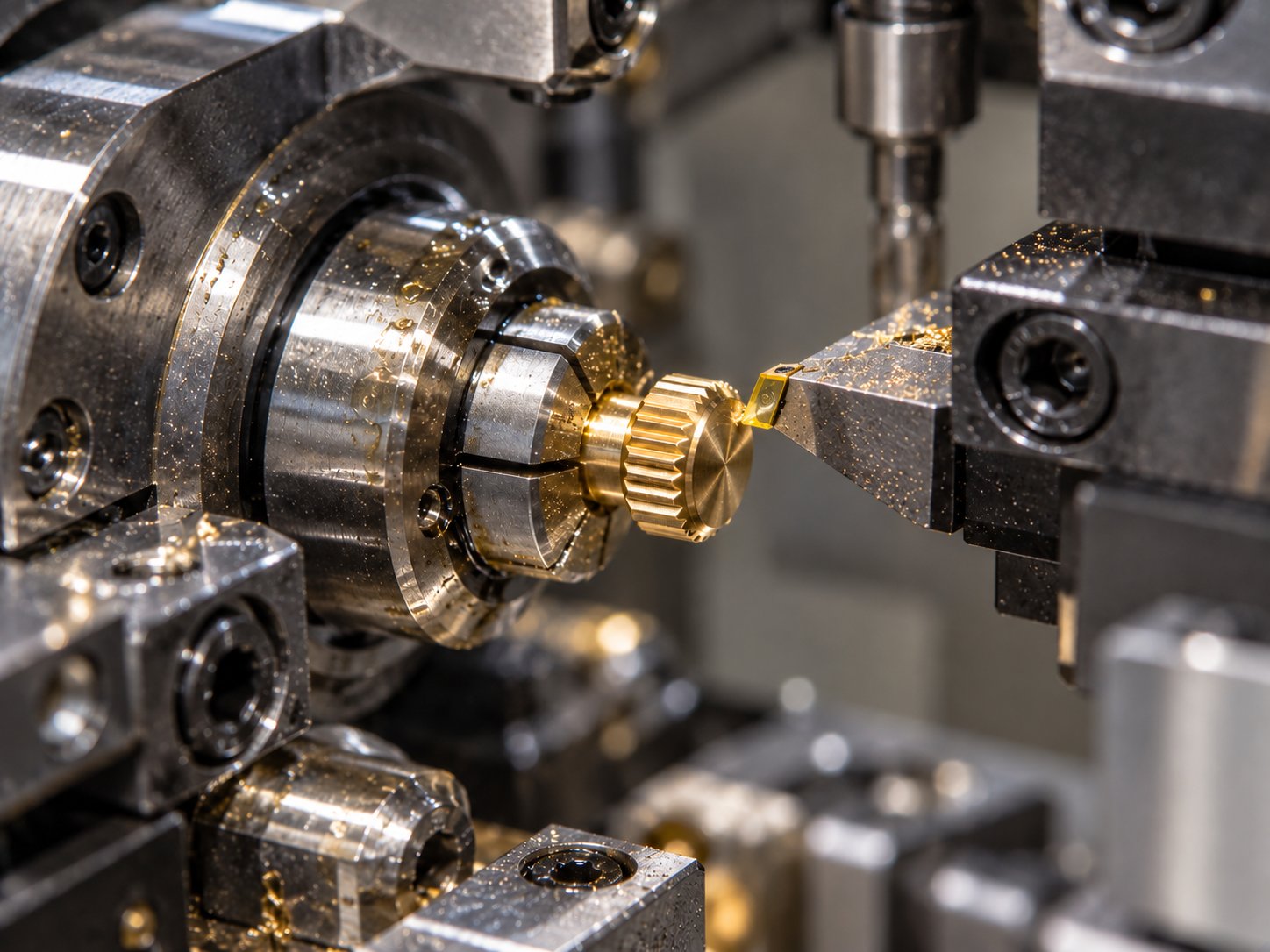
- Finish with a single crystal diamond tool where the surface is visible or will be plated. Its very sharp edge cuts the tougher metal cleanly in a light final pass, and gives the same mirror surface as on classic brass.
Where a diamond tool helps most
For roughing, drilling and threading, carbide stays the right choice on any brass. The single crystal diamond tool is for the last pass on surfaces that matter: valve balls, tap bodies before chrome plating, decorative fittings and visible parts. On low-lead brass, the sharpness of the diamond edge is an even bigger advantage than on classic brass, because a blunter edge tears these tougher alloys. And because diamond resists the abrasive particles in silicon brass, the edge keeps its finish over long batches.
For more on the finishing pass itself, see our guide to machining brass to a mirror finish.
Where Bulunmaz fits
Bulunmaz makes single crystal diamond finishing tools for brass, in natural diamond and MCD: ball finishing tools for valve ball machines, turning tools, inserts and form tools, as standard tools or to your drawing, and resharpens them. Tell us your alloy and your machine, and we'll suggest a finishing tool. See our diamond tools for valves and fittings.
FAQ
- What is lead-free brass?
- Brass with very little or no lead. In the USA, parts in contact with drinking water must not exceed 0.25% lead on a weighted average of the wetted surfaces. In Europe, the Drinking Water Directive and the lists of approved materials limit lead in brass for drinking water parts. Common low-lead alloys include silicon brass such as CuZn21Si3P (CW724R) and lead-free brasses such as CuZn42.
- Why is lead-free brass harder to machine?
- Lead acts as a built-in chip breaker and lubricant. Without it, chips are longer and tougher, cutting forces and heat rise, and the tool wears faster. Silicon brass also contains hard particles that are more abrasive for the cutting edge.
- Can diamond tools cut lead-free brass?
- Yes. Single crystal diamond tools, natural diamond or MCD, cut low-lead and lead-free brass well in the finishing pass, and give the same bright surface as on classic brass. Roughing is still done with carbide.
- How do I control long chips on lead-free brass?
- Use tool geometries with chip breakers or chip-forming grooves, adjust feed and depth so the chip breaks, use enough coolant pressure to clear the chips, and avoid long finishing passes that let a chip wrap around the part.
- Do I need new tools when switching to low-lead brass?
- Often yes, at least for the most demanding operations. Geometries that worked on free-cutting brass may give long chips or fast wear. Tell us your alloy and your current tools, and we can suggest a finishing tool to match.
Running a machine and need the tool for it? Send us the material, a drawing or photo and the finish you need.
Request a quoteArticles for valve and fittings makers
All articlesRequest a quote
Tell us about your part
Send the material, a drawing or photo, and the finish you need. We'll suggest the right tool and send you a quote.
- Email: hello@bulunmaztools.com
- WhatsApp: +90 532 561 99 62