
Knowledge · Nameplates & Metal Logos
What is a diamond-cut nameplate, and how is it made?
A diamond-cut nameplate is an aluminum plate or badge with bright, mirror-like edges, facets or stripes against a colored surface. You find them on appliances, audio equipment, cars, machines and premium packaging. The bright lines are not printed or polished: they are cut with a diamond tool through the colored anodized layer into bare metal. This guide explains how these plates are made, where they are used and what the cutting tool has to do.
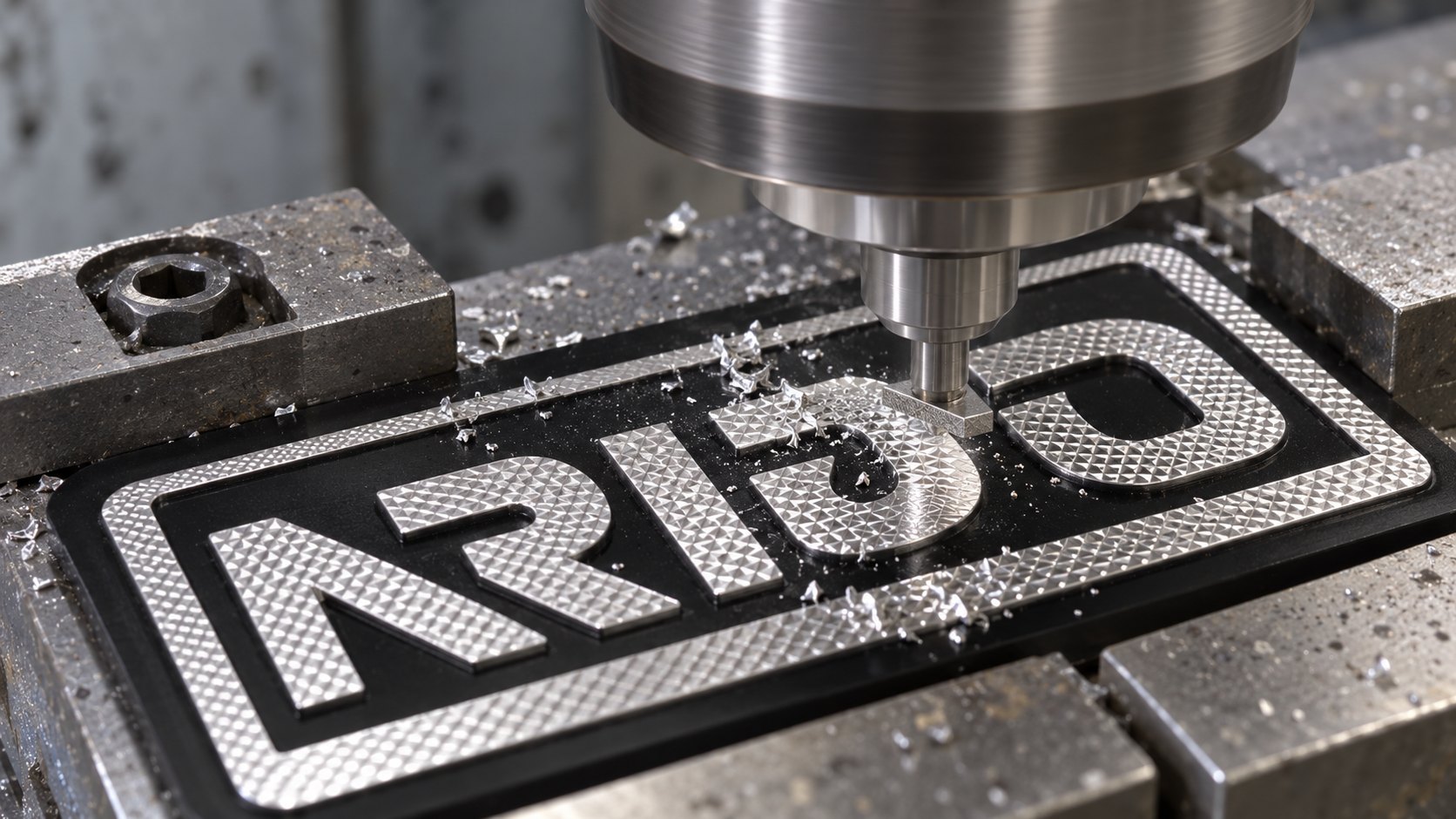
What makes a nameplate "diamond-cut"
Most metal nameplates get their look from printing, etching, laser marking or stamping. A diamond-cut plate is different: its bright features are cut metal. After the plate is anodized in its color, a diamond tool cuts away the colored layer along the edges of the letters, a frame or a pattern, and the bare aluminum underneath comes out mirror-bright. Because the bright surface is a real cut facet, it catches the light differently as the plate is turned, and looks deeper than ink or foil.
How a diamond-cut nameplate is made
- Blank. The plate is cut from aluminum sheet or plate, or from brass.
- Shape and relief. Raised letters and logos are made by embossing, stamping or machining. Flat plates skip this step.
- Surface finish. The surface may be brushed, blasted or left smooth before coloring.
- Anodizing. The plate is anodized and dyed in its color, for example black, silver, champagne or blue.
- Diamond cutting. On a high-speed CNC engraving or machining center, a single crystal diamond cutter cuts the bright features through the colored layer: chamfers around raised letters, facets, stripes, or flat mirror areas.
- Protection. The bare cut metal would tarnish, so the plate is often anodized again with a thin clear layer, or lacquered.
- Backing. Adhesive, pins or holes are added for mounting.
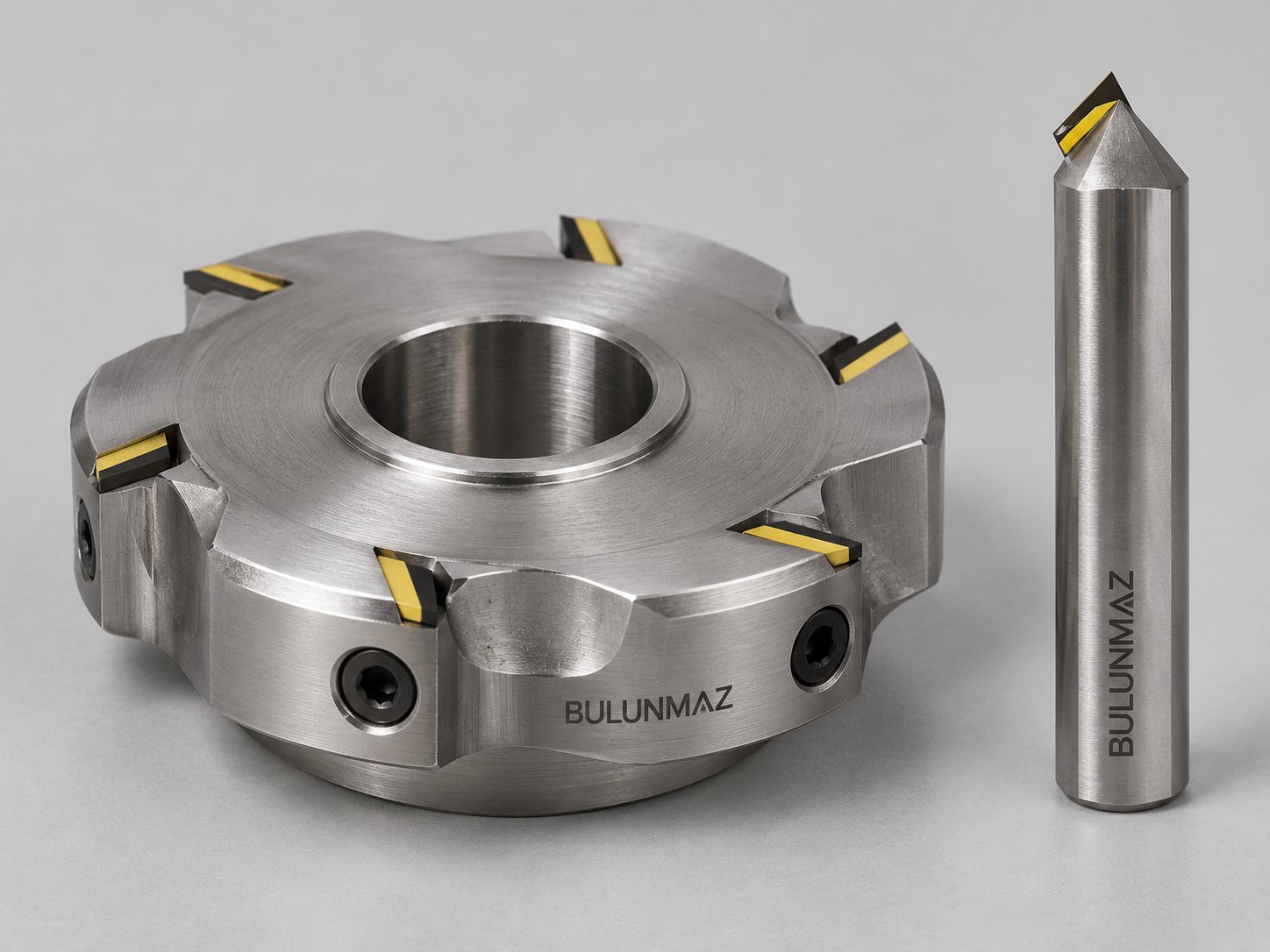
The bright features, and the cutter for each
| Feature | Tool | Notes |
|---|---|---|
| Bright edge around raised letters or a frame | Diamond chamfer cutter | Angle and width to the design |
| Fine bright lines, stripes, hairlines | Diamond V-cutter | Included angle decides line width at a given depth |
| Flat mirror areas, domed logo faces | Diamond face cutter or fly cutter | Needs a very flat setup |
| Special profiles | Form cutter to a drawing | Made to the shape in the design |
How it compares with other nameplates
| Diamond-cut | Printed or foil | Etched | Laser-marked | |
|---|---|---|---|---|
| Bright areas | Cut metal, mirror | Ink or foil | Recessed, usually matte or filled | Marked or ablated surface |
| Look | Deep, changes with the light | Flat | Fine detail, flat | Fine detail, flat |
| Cost | Higher | Low | Medium | Low to medium |
| Typical use | Premium appliances, audio, cars, machines, packaging | Everyday labels | Data plates, technical labels | Serial numbers, data plates |
What the cutting tool has to get right
- A perfect edge. The cut is the finish. Any chip or wear in the diamond shows as a line or a dull band on every plate.
- A clean edge on the anodic layer. The colored layer is hard and brittle; a worn tool chips it where the bright cut meets the color.
- Consistency. Hundreds or thousands of plates must look identical. Single crystal diamond keeps its edge much longer on aluminum than carbide does.
- The right machine. A high-speed spindle with very low runout, a rigid fixture and a light, steady finishing pass.
Diamond-cut plates are aluminum or brass. Stainless steel plates cannot be diamond-cut, because diamond reacts with iron; their bright finishes come from polishing, etching or other methods. For more on the cutters, see chamfer cutters for a mirror chamfer.
What Bulunmaz does
Bulunmaz makes single crystal diamond chamfer cutters, V-cutters, face cutters and form cutters in natural diamond and MCD for nameplate and badge makers, standard or to your drawing, and resharpens them. We do not make nameplates. See our diamond tools for nameplates and metal logos, or send us a sample plate or drawing for a quote.
FAQ
- What is a diamond-cut nameplate?
- An aluminum nameplate, badge or logo whose edges, facets or stripes are cut with a diamond tool after anodizing, so they shine like bare polished metal against the colored surface.
- How is the bright edge on a nameplate made?
- The plate is formed or machined, anodized in its color, and then a diamond cutter cuts through the colored layer at the edges of the letters or frame, leaving a mirror-bright chamfer or face. The plate is then often protected with a clear anodic layer or lacquer.
- What material are diamond-cut nameplates made of?
- Usually aluminum, because it anodizes well and cuts to a mirror with diamond. Brass is also used. Stainless steel plates cannot be diamond-cut; their bright finishes are made by other methods.
- What is the difference between a diamond-cut and a printed nameplate?
- On a printed plate the bright areas are ink or foil. On a diamond-cut plate they are bare, cut metal, which looks deeper and catches the light as the viewing angle changes. Diamond cutting costs more and is used for premium products.
- Which tools are used for diamond-cut nameplates?
- Single crystal diamond chamfer cutters for bright edges around letters, V-cutters for fine lines and stripes, and face cutters for flat mirror areas, usually on high-speed CNC engraving or machining centers.
- Does Bulunmaz make nameplates?
- No. Bulunmaz makes the diamond cutting tools for nameplate and badge makers who run their own machines.
Running a machine and need the tool for it? Send us the material, a drawing or photo and the finish you need.
Request a quoteArticles for nameplate and badge makers
All articlesRequest a quote
Tell us about your part
Send the material, a drawing or photo, and the finish you need. We'll suggest the right tool and send you a quote.
- Email: hello@bulunmaztools.com
- WhatsApp: +90 532 561 99 62