
Knowledge · Consumer Electronics
Chamfer cutters for a mirror chamfer: how bright edges on aluminum are cut
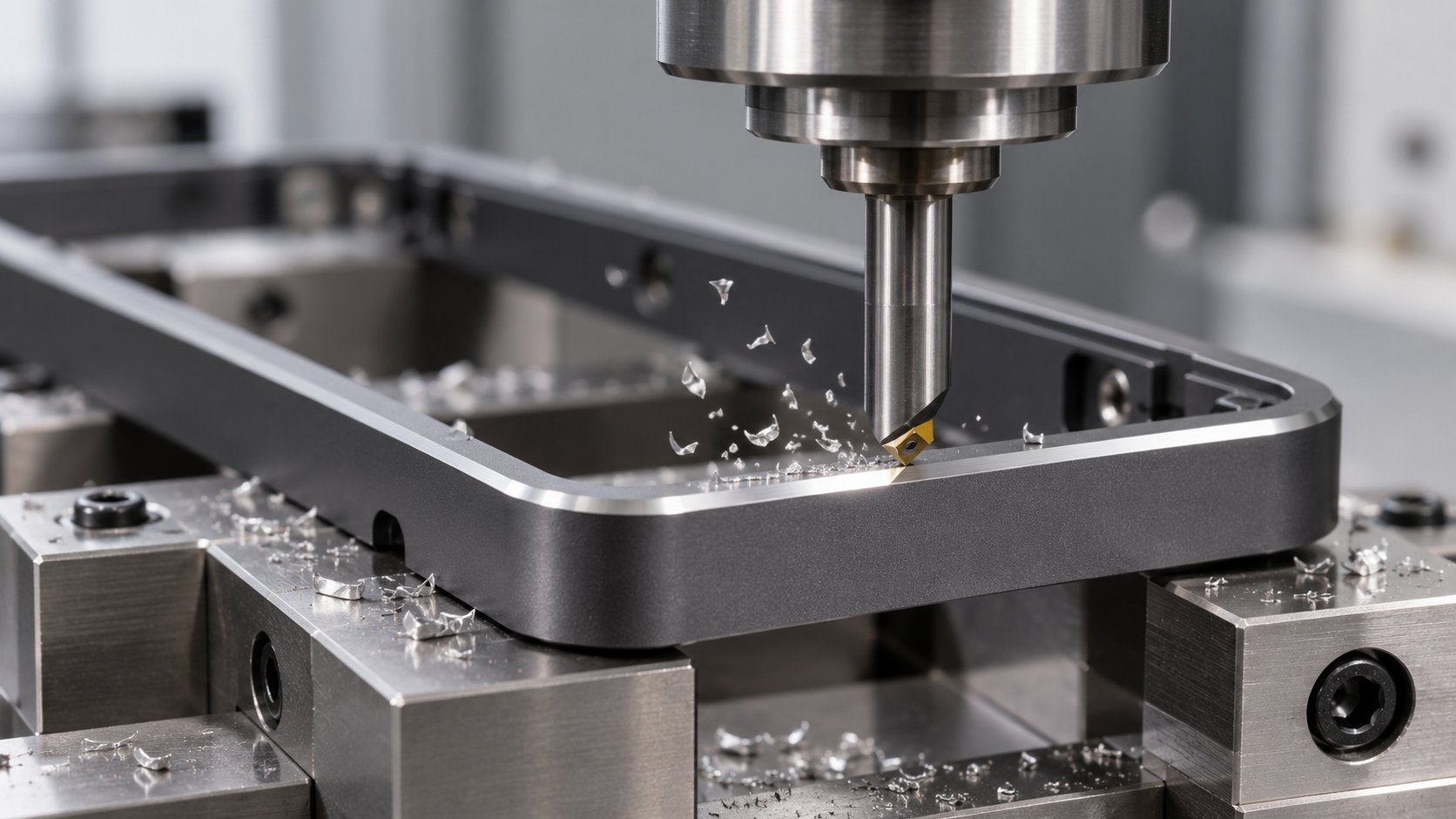
Most chamfer cutters are made to remove a sharp edge or a burr. Some are made for a different job: cutting a chamfer that is the visible, bright feature of the part. The thin shiny line around an aluminum phone frame, laptop or nameplate is such a chamfer. This guide explains which chamfer cutter gives which result, how the bright chamfer fits into anodizing, and what the machine and tool need for a mirror edge.
Two kinds of chamfer
A functional chamfer breaks a sharp edge, removes a burr, or helps a part fit. Nobody looks at it closely. A decorative chamfer is a visible feature: it has to be even, bright and identical on every part, because it is part of how the product looks. The cutter that is right for one is usually wrong for the other.
Which chamfer cutter gives which result
| Carbide | PCD | Single crystal diamond | |
|---|---|---|---|
| Typical use | Deburring, countersinks, functional chamfers | Long runs, abrasive aluminum alloys | Bright, decorative chamfers |
| Finish on aluminum | Clean, satin to bright | Bright, not a mirror | Mirror |
| Edge life on aluminum | Short to medium | Very long | Long on suitable alloys |
| Sensitivity to vibration | Low | Low | High: needs a rigid setup |
| Cost per tool | Low | Medium | Higher, but can be resharpened several times |
Carbide and PCD edges are made of grains: very fine, but still grains. Their cut is bright, but not a mirror. A single crystal diamond edge has no grains, so it can be polished almost perfectly straight and sharp, and the chamfer it cuts is a copy of that edge. For the difference between the diamonds, see MCD vs PCD.
The bright chamfer and anodizing
On colored aluminum parts, the bright chamfer is usually cut after anodizing:
- Machine the part to its final shape, leaving the chamfer edge sharp.
- Anodize the part in its color.
- Cut the chamfer with a diamond chamfer cutter, through the colored layer into bare aluminum. The chamfer comes out mirror-bright against the colored surface.
- Protect it. Often the part is anodized again with a thin clear layer, or lacquered, so the bright edge does not tarnish.
The same sequence is used on diamond-cut nameplates and logos. See how diamond-cut nameplates are made.
What the machine and tool need for a mirror chamfer
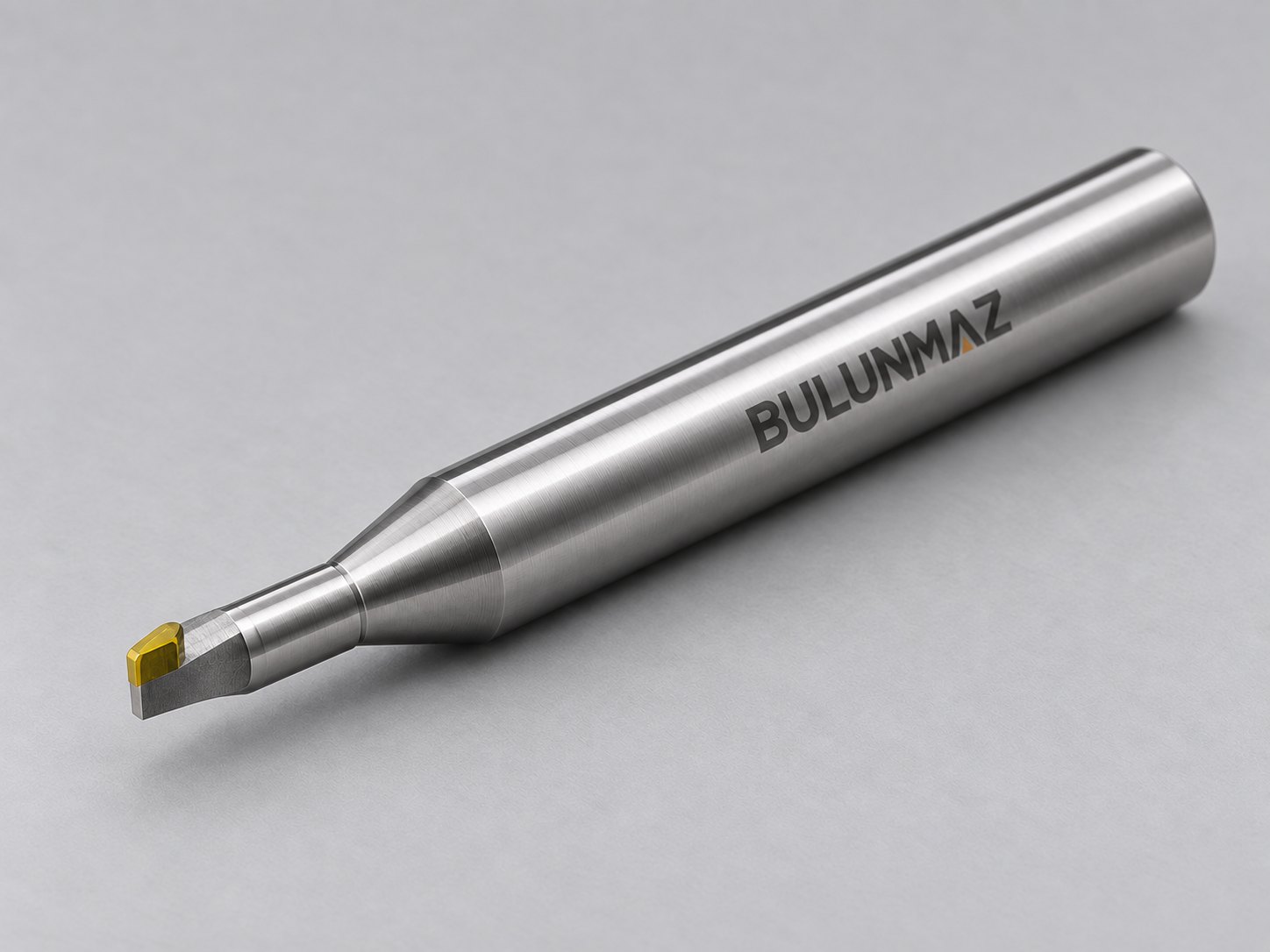
- A rigid machine and a spindle with very low runout. A single crystal diamond chamfer cutter usually has one cutting edge; runout or vibration shows directly on the chamfer and can chip the diamond.
- A light, steady finishing pass. Rough the chamfer with another tool if a lot of material must come off, and let the diamond take a small, even final cut.
- Constant engagement along the path. Changes in depth or feed, and stops on the edge, leave visible marks. Smooth toolpaths around corners matter.
- The right angle and size. The cutter is made to the chamfer angle and width on your drawing.
- Clean coolant or air blast. Chips dragged across a fresh mirror chamfer scratch it.
Common faults on a bright chamfer
| What you see | Likely cause | What to do |
|---|---|---|
| Hazy or dull chamfer | Worn edge | Resharpen or replace the cutter |
| Fine line along the chamfer | Small chip in the diamond edge | Inspect and resharpen |
| Chipped anodic layer at the edge | Worn edge, too much engagement, vibration | Sharp edge, lighter pass, more rigid setup |
| Uneven chamfer width | Part position, runout, uneven stock | Probe the part, check runout and the previous operation |
| Marks at corners or start points | Feed or depth changes on the edge | Smooth the toolpath, avoid stops on the chamfer |
Materials
Single crystal diamond chamfer cutters work on aluminum (wrought alloys such as the 6000 and 7000 series give the brightest result), brass, copper, gold, silver and plastics such as acrylic. They are not for steel, stainless steel or titanium frames. High-silicon cast aluminum wears the edge quickly; PCD is usually better there.
What Bulunmaz does
Bulunmaz makes single crystal diamond chamfer cutters in MCD and natural diamond, to the angle and size on your drawing, and resharpens them when the edge wears. See our diamond tools for aluminum housings and diamond milling and chamfer cutters, or send us your part for a quote.
FAQ
- What is the best chamfer cutter for aluminum?
- It depends on the result you need. For deburring and functional chamfers, a sharp carbide chamfer cutter is the economical choice. For long runs on abrasive alloys, PCD lasts longest. For a chamfer that must shine like a mirror, use a single crystal diamond chamfer cutter.
- How is the shiny edge on aluminum phones and laptops made?
- The part is machined and anodized in its color, then a diamond chamfer cutter cuts through the colored layer into bare aluminum, leaving a mirror-bright chamfer. Often the part is anodized again with a thin clear layer to protect that bright edge.
- Can a carbide chamfer cutter give a mirror finish?
- Rarely. A new, polished carbide edge gives a clean, bright chamfer, but not a true mirror, and the brightness fades as the edge wears. For a mirror that stays the same over a long run, single crystal diamond is the tool.
- Do diamond chamfer cutters work on steel or titanium?
- No. Diamond reacts with iron at cutting temperature, and titanium is also unsuitable. Diamond chamfer cutters are for aluminum, brass, copper, precious metals and plastics.
- What chamfer angles are available?
- Any angle the part needs; 45 degrees is the most common. Single crystal diamond chamfer cutters are usually made to the angle and size on your drawing.
- Why does my bright chamfer show chips at the anodized edge?
- The coloured anodic layer is hard and brittle. A worn edge, too much engagement or vibration can chip it where the chamfer meets the colored surface. A sharp diamond edge, a light finishing pass and a rigid setup keep that line clean.
Running a machine and need the tool for it? Send us the material, a drawing or photo and the finish you need.
Request a quoteArticles for housing makers
All articlesMCD vs PCD: which diamond cutting tool do you need?
Request a quote
Tell us about your part
Send the material, a drawing or photo, and the finish you need. We'll suggest the right tool and send you a quote.
- Email: hello@bulunmaztools.com
- WhatsApp: +90 532 561 99 62