
Knowledge · Watchmaking
Which materials can be cut with a diamond tool, and why not steel
Single crystal diamond tools cut aluminum, brass, copper, gold and acrylic to a mirror finish in one pass. Put the same tool on steel and the edge is gone within minutes. The reason is chemistry, not hardness. This guide lists which materials suit a diamond tool, which do not, and why, so you can tell quickly whether a diamond tool is right for your part.
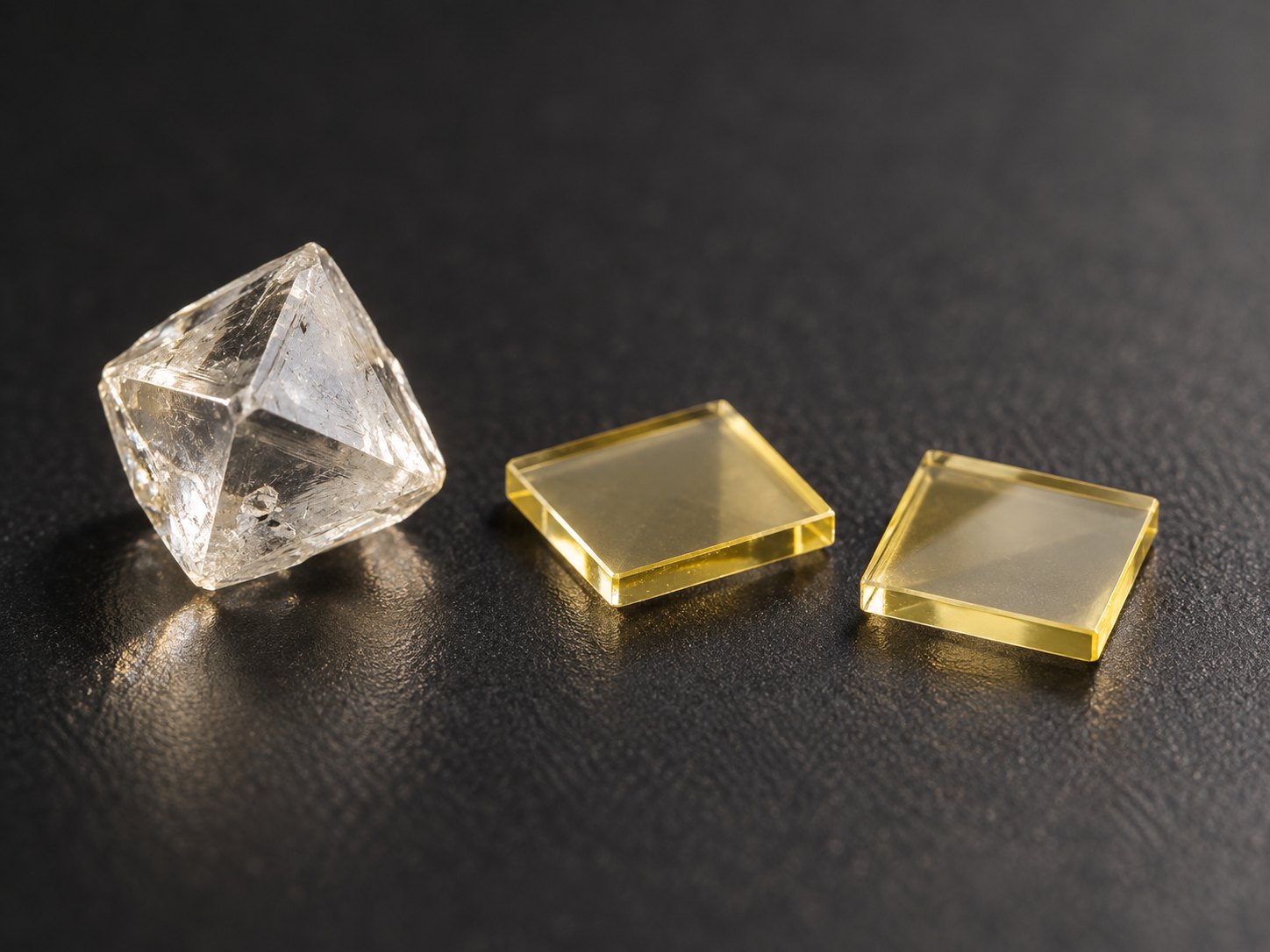
The short list
| Material | Single crystal diamond? | Notes |
|---|---|---|
| Aluminum (wrought alloys, pure aluminum) | Yes, excellent | 6000 and 7000 series give the brightest finish |
| High-silicon cast aluminum | Possible, wears fast | PCD is usually better |
| Copper, brass, bronze | Yes, excellent | Includes low-lead brass; watch chip control |
| Gold, silver, platinum, palladium | Yes | The basis of diamond-cut jewelry and watch parts |
| Electroless nickel (nickel-phosphorus) | Yes | High-phosphorus coatings on mold inserts |
| Acrylic, polycarbonate, other optical plastics | Yes | Clear edges and optical surfaces |
| Germanium, silicon, zinc selenide, zinc sulfide | Yes, with negative rake | Very small depth of cut |
| Steel, cast iron, stainless steel | No | Diamond reacts with iron |
| Titanium | No | Reacts with carbon; use carbide |
| Nickel alloys, electrolytic nickel, cobalt | No | Same chemical wear |
| Optical glass | No, in normal practice | Ground and polished, or molded |
| Carbon fiber and other abrasive composites | Not single crystal | PCD is the tool |
Why diamond cannot cut steel
Diamond is the hardest material known, so it seems strange that it fails on steel. The reason is chemistry. Diamond is pure carbon, and at the temperatures reached at the cutting edge, iron dissolves carbon and reacts with it. Atom by atom, the edge is worn away, and it goes blunt after a very short cut. Nickel, cobalt and titanium behave in a similar way. This is why steel, stainless steel and titanium are cut with carbide, CBN or ceramic tools, never single crystal diamond.
The same rule explains a trick used in optics: steel mold inserts are coated with electroless nickel-phosphorus, and the diamond tool cuts the coating, not the steel. With enough phosphorus in the coating, the reaction does not happen.
Why diamond is so good on the others
On aluminum, copper, brass, precious metals and plastics there is no such reaction, and the diamond's real strengths show: an edge that can be polished far sharper than any other cutting material, extreme hardness, and very fast heat removal. The edge stays sharp and cool, and the surface it leaves is a copy of that edge: a mirror, in one pass, with no polishing.
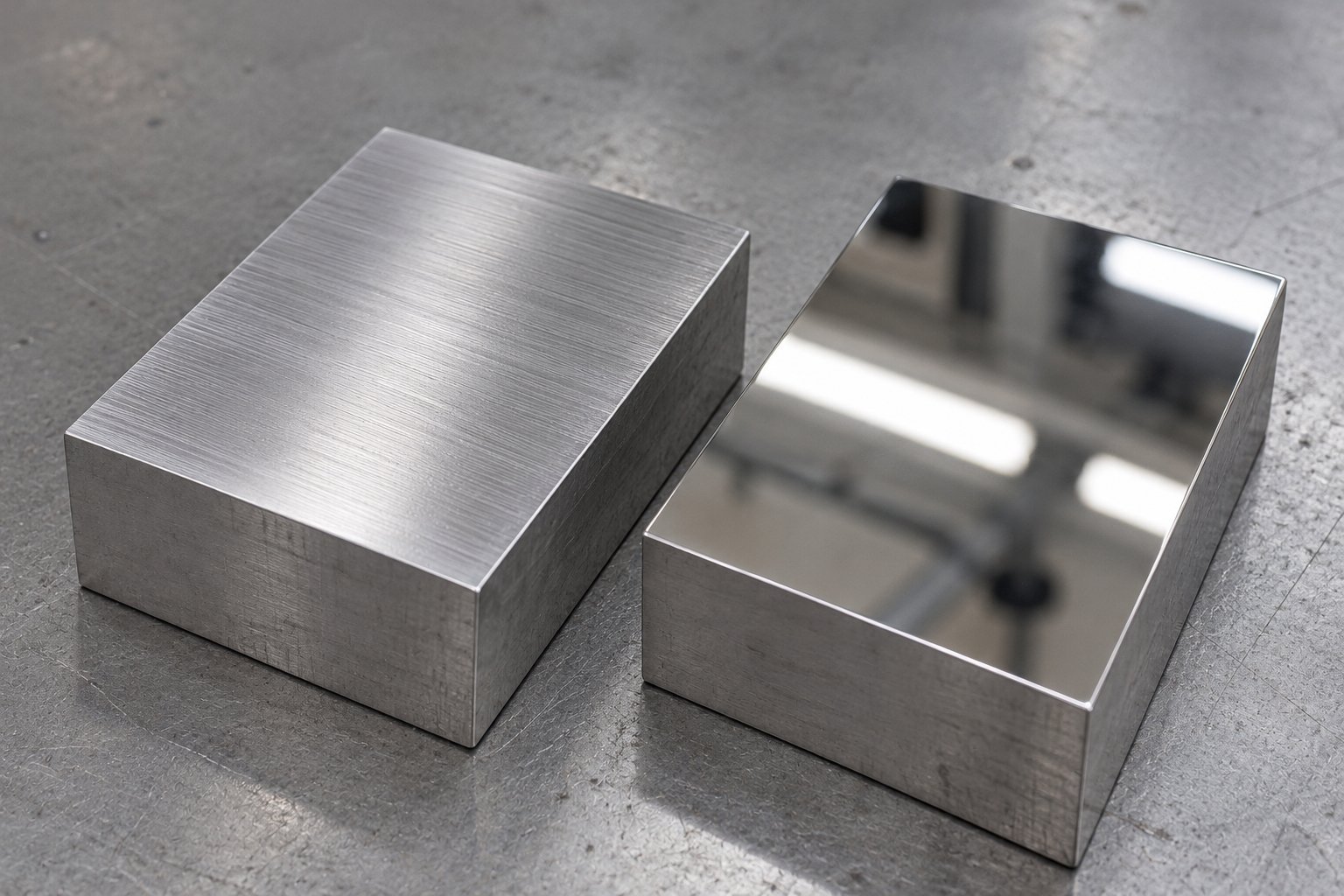
When diamond cuts it, but is not the best tool
- High-silicon cast aluminum (pistons, wheels and many housings): hard silicon particles wear a single crystal edge quickly. PCD lasts much longer. See MCD vs PCD.
- Heavy or interrupted cuts on any material: single crystal diamond is brittle and chips under impact. Use carbide or PCD for roughing, and diamond for the last light cut.
- Very abrasive fillers in plastics (glass-filled grades): they wear the edge; check with a test before a long run.
Brittle materials: the special case
Germanium, silicon and other infrared crystals are brittle, yet they are routinely diamond turned for thermal camera lenses. The trick is a tool with a negative rake angle and a very small depth of cut. Under those conditions the material comes off as a fine chip, like a metal, instead of cracking. See what is single point diamond turning.
Quick check: is a diamond tool right for my part?
- Is the material non-ferrous (aluminum, copper, brass, precious metal), a plastic, electroless nickel or an infrared crystal? Then diamond is a candidate.
- Does the surface need to be a mirror, or optically clear? Then single crystal diamond is usually the tool.
- Is the cut light and steady, on a rigid machine? Then single crystal diamond will last.
- Is it steel, titanium or a nickel alloy? Then it is a job for carbide, CBN or ceramic.
What Bulunmaz does
Bulunmaz makes single crystal diamond tools in natural diamond and MCD for the materials in the first half of the table: turning tools, end mills, chamfer cutters, inserts and fly cutters, standard or to your drawing. If you are not sure your material suits a diamond tool, send us the grade and a photo of the part and we will tell you plainly. See our guide to natural diamond, MCD and CVD.
FAQ
- Can a diamond tool cut steel?
- Not for long. At cutting temperature, the carbon of the diamond reacts with the iron in the steel, and the edge wears away very quickly. Steel, cast iron and stainless steel are cut with carbide, CBN or ceramic tools.
- Can diamond tools cut titanium?
- Single crystal diamond is not suitable for titanium. Titanium reacts with carbon at cutting temperature and the edge wears fast. Titanium is machined with carbide.
- Why can diamond cut aluminum but not steel, if diamond is the hardest material?
- Hardness is not the limit; chemistry is. Diamond is pure carbon. Iron, nickel, cobalt and titanium react with carbon at the temperatures found at the cutting edge, so the diamond wears chemically. Aluminum, copper, brass, gold and plastics do not react this way.
- Can steel molds be diamond turned?
- Not directly. Steel mold inserts are coated with electroless nickel (nickel-phosphorus), and the diamond tool cuts that coating. High-phosphorus electroless nickel is a standard diamond turning material.
- Can diamond cut glass?
- In normal practice, single crystal diamond tools do not turn optical glass; it is too brittle and wears the edge. Glass lenses are ground and polished, or molded. Some infrared glasses (chalcogenides) and crystals such as germanium and silicon can be diamond turned.
- Is diamond good for high-silicon aluminum?
- It cuts it, but the hard silicon particles wear a single crystal edge quickly, and the finish suffers. For high-silicon cast aluminum, PCD is usually the better tool.
Running a machine and need the tool for it? Send us the material, a drawing or photo and the finish you need.
Request a quoteArticles for watchmakers
All articlesSwiss-type turning of watch parts: when to use a diamond tool
Request a quote
Tell us about your part
Send the material, the part (dial, hand, bezel, bridge...), your machine and a drawing or photo. We'll suggest the right tool and send you a quote.
- Email: hello@bulunmaztools.com
- WhatsApp: +90 532 561 99 62