
Knowledge · Valves & Fittings
How valve balls get their mirror surface
The ball inside a ball valve is the part that does the sealing. It turns a quarter turn against two soft seats, and it can only seal tightly, turn smoothly and last if its surface is round and smooth. In brass valves, that mirror surface usually comes from one tool: a single crystal diamond that makes the last cut. This guide follows a brass valve ball from blank to finished part, and explains what the finishing tool has to do.
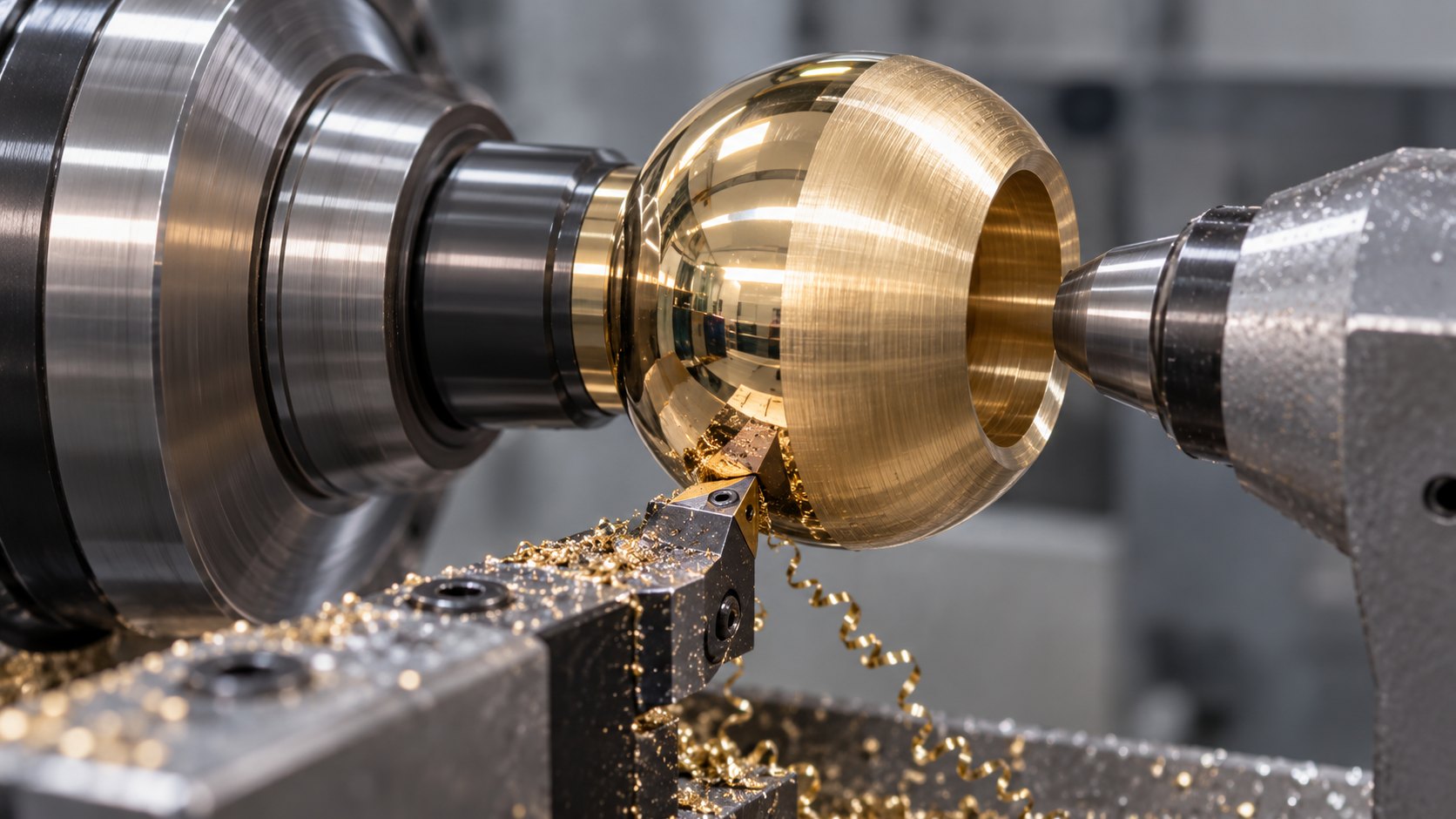
What the ball has to do
A ball valve opens and closes with a quarter turn. The ball has a hole through it: lined up with the pipe, the valve is open; turned 90 degrees, the solid side of the ball faces the flow and the valve is closed. Two seats, usually made of PTFE, press against the ball on either side.
That contact is the whole seal. For it to work, the ball must be:
- Round: an out-of-round ball presses unevenly on the seats and leaks or sticks.
- Smooth: scratches, rings and dull bands become leak paths and wear the soft seats every time the valve is turned.
- Free of defects: when the ball is plated, the plating copies the surface underneath, so every mark on the brass shows on the finished ball.
From blank to finished ball
Brass balls for plumbing and gas valves are usually made in these steps:
- Blank. A ball blank is hot-forged or cut from brass bar.
- Rough turning. Carbide tools bring the blank close to size, leaving a small, even allowance for finishing.
- Bore and slot. The through-hole is drilled, and the slot for the valve stem is milled.
- Finish turning. On a ball turning machine, or a lathe with a ball turning attachment, the finishing tool swings around the ball's center while the ball spins. This generates a true sphere. A single crystal diamond tool makes this last light cut and leaves a mirror surface.
- Plating, if used. Many brass balls are then plated, most often with chrome; some are used without plating.
- Inspection. Diameter, roundness and surface are checked before assembly.
When the finish cut does not leave a mirror, a polishing step has to be added. Polishing costs time, adds handling, and can take a ball out of round. That is why many valve makers finish the ball with a diamond tool.
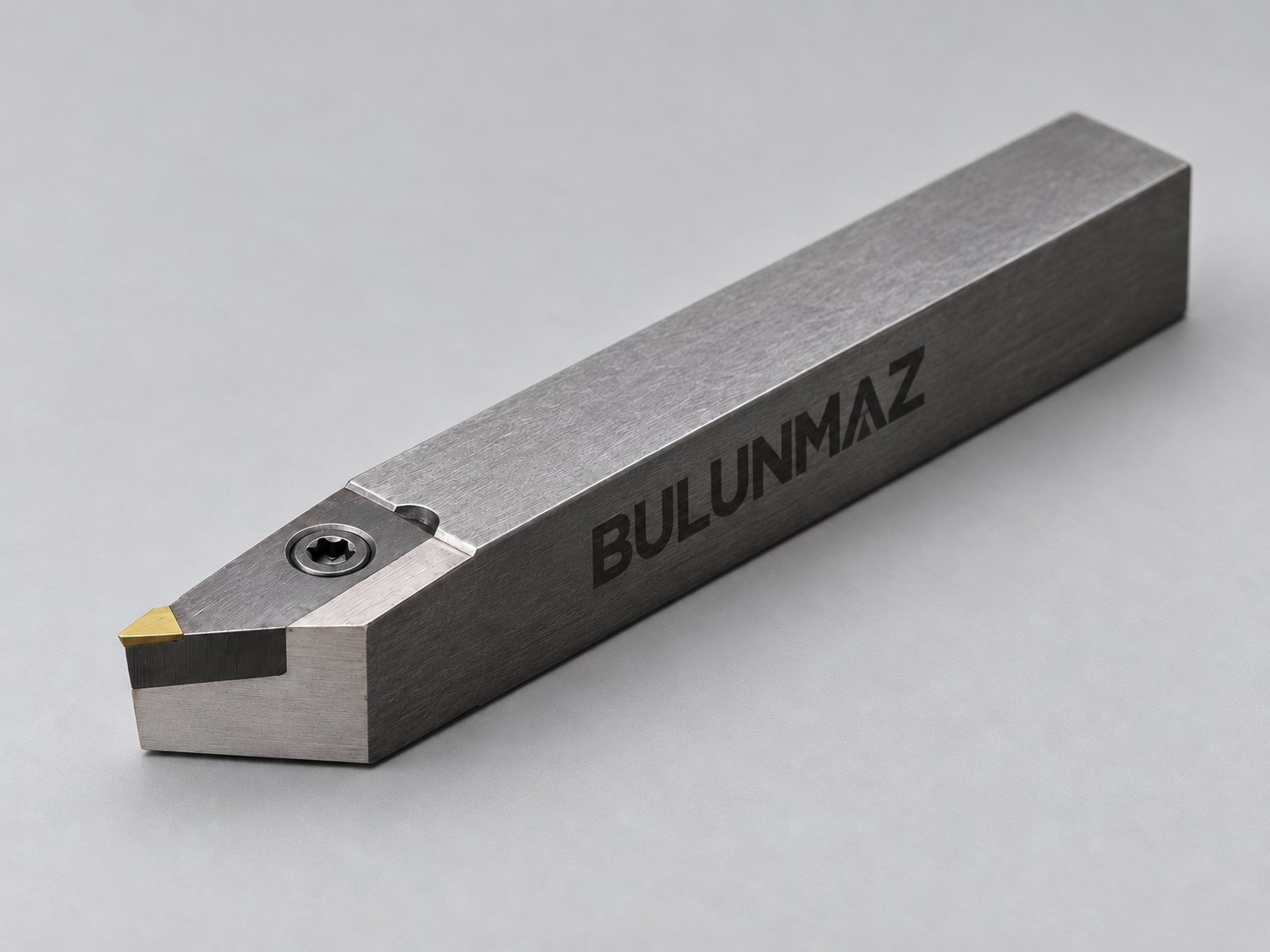
Why the last cut is made with diamond
A single crystal diamond, natural diamond or MCD, can be polished to an edge far sharper and straighter than any carbide edge. The ball surface is a copy of that edge. On brass, a single crystal diamond tool on a stable machine leaves a surface that reflects like a mirror, straight from the cut. The edge also stays sharp for a long time on brass, so the finish stays the same over long batches.
Diamond is only for the finish cut. Roughing, drilling and slotting are done with carbide, because single crystal diamond is very hard but brittle, and does not like heavy or interrupted cuts. The slot and the bore interrupt the cut on every turn, so the finishing tool must make a light, steady cut.
What the finishing tool has to get right
- The right shape for the machine. Ball turning machines take their own tool holders and shank sizes. The tool must fit, and its tip must sit exactly on the machine's center line.
- The right nose radius. The tip radius, together with the feed, decides how fine the turning marks are. A radius that suits the ball size and the machine's feed gives marks too fine to see.
- A clean, unchipped edge. A small chip in the diamond draws a fine line around every ball, and plating does not hide it. Inspect the edge when lines appear.
- A stable setup. Vibration leaves chatter marks and can chip the diamond. Short tool overhang and a well-clamped ball help.
- Chip control. Brass chips wrapping around the ball scratch the fresh surface. This matters even more with low-lead brass, which makes longer chips. See low-lead brass: what changes for the cutting tool.
Common faults on a finished ball
| What you see | Likely cause | What to do |
|---|---|---|
| Dull or hazy surface | Worn tool edge | Resharpen or replace the tool |
| Fine line around the ball | Small chip in the diamond edge | Inspect and resharpen the edge |
| Wavy pattern, chatter marks | Vibration, long overhang, loose clamping | Shorten overhang, clamp more rigidly |
| Random scratches | Chips wrapping around the ball, dirty coolant | Improve chip control, filter the coolant |
| Ball out of round | Machine wear, tool not on center, too much stock left for finishing | Check the machine and tool height, leave an even finishing allowance |
Stainless steel and industrial balls
Not every valve ball is brass. Stainless steel balls, and the hard-coated balls used in many industrial valves, cannot be finished with a diamond tool: diamond reacts with iron at cutting temperature and wears out fast. These balls are ground and then lapped or polished. Diamond turning is the method for brass and other non-ferrous balls.
What Bulunmaz does
Bulunmaz makes single crystal diamond ball finishing tools in natural diamond and MCD, made to fit your ball turning machine or lathe attachment, and resharpens them when the edge wears. Send us your machine model and a photo of the tool you use today. We confirm the fit before quoting. See our diamond tools for valve balls and brass fittings, and machining brass to a mirror finish.
We do not machine valve parts for customers or sell ball turning machines.
FAQ
- What is a valve ball made of?
- In plumbing and gas valves, usually brass, often chrome-plated. Industrial valves also use stainless steel and other alloys, and some have hard-coated balls. The material decides how the ball is finished: brass is turned, steel balls are ground and lapped.
- Why does the surface of a valve ball matter?
- The ball seals against soft seats, usually PTFE. Any scratch, ring or dull band becomes a leak path, and a rough surface wears the seats faster and makes the valve harder to turn. Roundness matters as much as smoothness.
- How is a brass valve ball turned?
- On a ball turning machine or a lathe with a ball turning attachment, the tool swings around the ball's center while the ball spins, so it generates a true sphere. Carbide does the roughing; a single crystal diamond tool makes the last light cut and leaves a mirror surface.
- Is the ball polished after turning?
- Not if the diamond-turned surface is already a mirror. If the ball is plated, the plating copies the surface underneath, so a diamond-turned ball can go straight to plating. Balls with a dull or marked surface need polishing first, which costs time and can spoil roundness.
- Can diamond tools finish stainless steel valve balls?
- No. Diamond reacts with iron at cutting temperature and wears out quickly. Stainless steel balls are ground and then lapped or polished.
- Does low-lead brass change the finishing?
- Yes. Low-lead and lead-free brasses form longer chips and wear tools faster. A sharp single crystal diamond edge still gives a mirror finish, but chip control and parameters may need adjusting. See our article on low-lead brass.
Running a machine and need the tool for it? Send us the material, a drawing or photo and the finish you need.
Request a quoteArticles for valve and fittings makers
All articlesLow-lead brass: what changes for the cutting tool
Request a quote
Tell us about your part
Send the material, a drawing or photo, and the finish you need. We'll suggest the right tool and send you a quote.
- Email: hello@bulunmaztools.com
- WhatsApp: +90 532 561 99 62