
Knowledge · Ophthalmic
What are contact lenses made of? Lens materials and how each is made
A contact lens is a thin shell of plastic that sits on the eye for hours, so its material has to do several things at once: let oxygen reach the cornea, stay clear and stable, and be comfortable. Over the decades, lens makers have used a handful of material families, and each one also decides how the lens is made. This guide explains the main materials for soft lenses, rigid gas permeable lenses and intraocular lenses, and which of them are lathe-cut with a diamond tool.
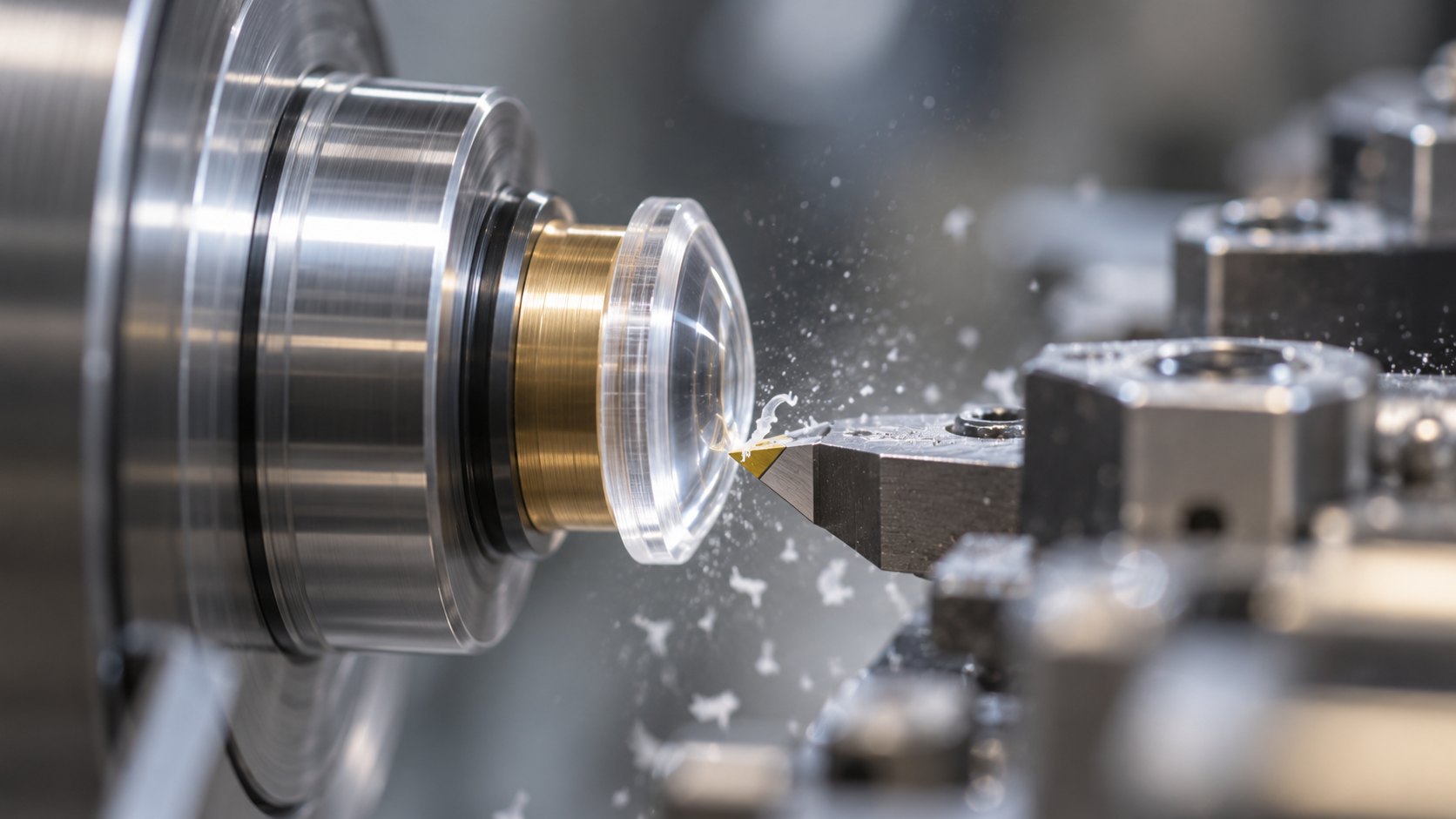
The main lens materials at a glance
| Material family | Typical lenses | Key property | How lenses are made |
|---|---|---|---|
| Hydrogel (HEMA-based and others) | Soft lenses | Absorbs water; soft and comfortable; oxygen comes through the water | Mostly cast-molded; custom lenses lathe-cut dry |
| Silicone hydrogel | Soft lenses | Silicone lets much more oxygen through | Mostly cast-molded; custom lenses lathe-cut dry |
| Silicone acrylate, fluorosilicone acrylate | Rigid gas permeable, scleral, ortho-k, keratoconus lenses | Rigid, holds its shape, oxygen passes through the material | Lathe-cut from buttons |
| PMMA | Early hard lenses; some IOLs | Very clear and stable, almost no oxygen permeability | Lathe-cut |
| Hydrophilic acrylic | Foldable IOLs | Absorbs water, soft when hydrated | Lathe-cut dry, hydrated afterwards |
| Hydrophobic acrylic | Foldable IOLs | Soft and flexible, little water | Lathe-cut or molded |
| Silicone | Some foldable IOLs | Very flexible | Usually molded |
Soft lenses: hydrogel and silicone hydrogel
Soft contact lenses are made of hydrogels: polymers that absorb water and become soft and flexible. The classic soft lens materials are based on HEMA (hydroxyethyl methacrylate). In a hydrogel, oxygen reaches the eye mainly by dissolving in the water inside the lens, so the oxygen supply depends on the water content and the thickness of the lens.
Silicone hydrogels combine a hydrogel with silicone, which lets far more oxygen pass through the material itself. In many markets they are now the most common material for everyday soft lenses.
Most soft lenses are cast-molded in large numbers. Custom soft lenses, for unusual prescriptions or eye shapes, are lathe-cut instead. The material is cut while it is still dry and hard (a "xerogel"), and only becomes soft when the finished lens is hydrated. Because the lens swells as it takes up water, the lathe cuts it smaller than the final size, by a known factor for each material.
Rigid gas permeable lenses: silicone and fluorosilicone acrylates
Rigid gas permeable (RGP or GP) lenses keep their own shape on the eye. That is why scleral lenses, ortho-k (night) lenses and lenses for keratoconus are rigid: their shape does the optical work. Their materials are mostly silicone acrylates and fluorosilicone acrylates. The silicone lets oxygen pass through the material; the fluorine helps the surface wet and resist deposits.
Lens makers compare these materials by their oxygen permeability, written as Dk, together with how they wet, how stable they are and how well they machine. GP lenses are almost always lathe-cut, one by one, from small buttons of the material.
PMMA: the first plastic lens material
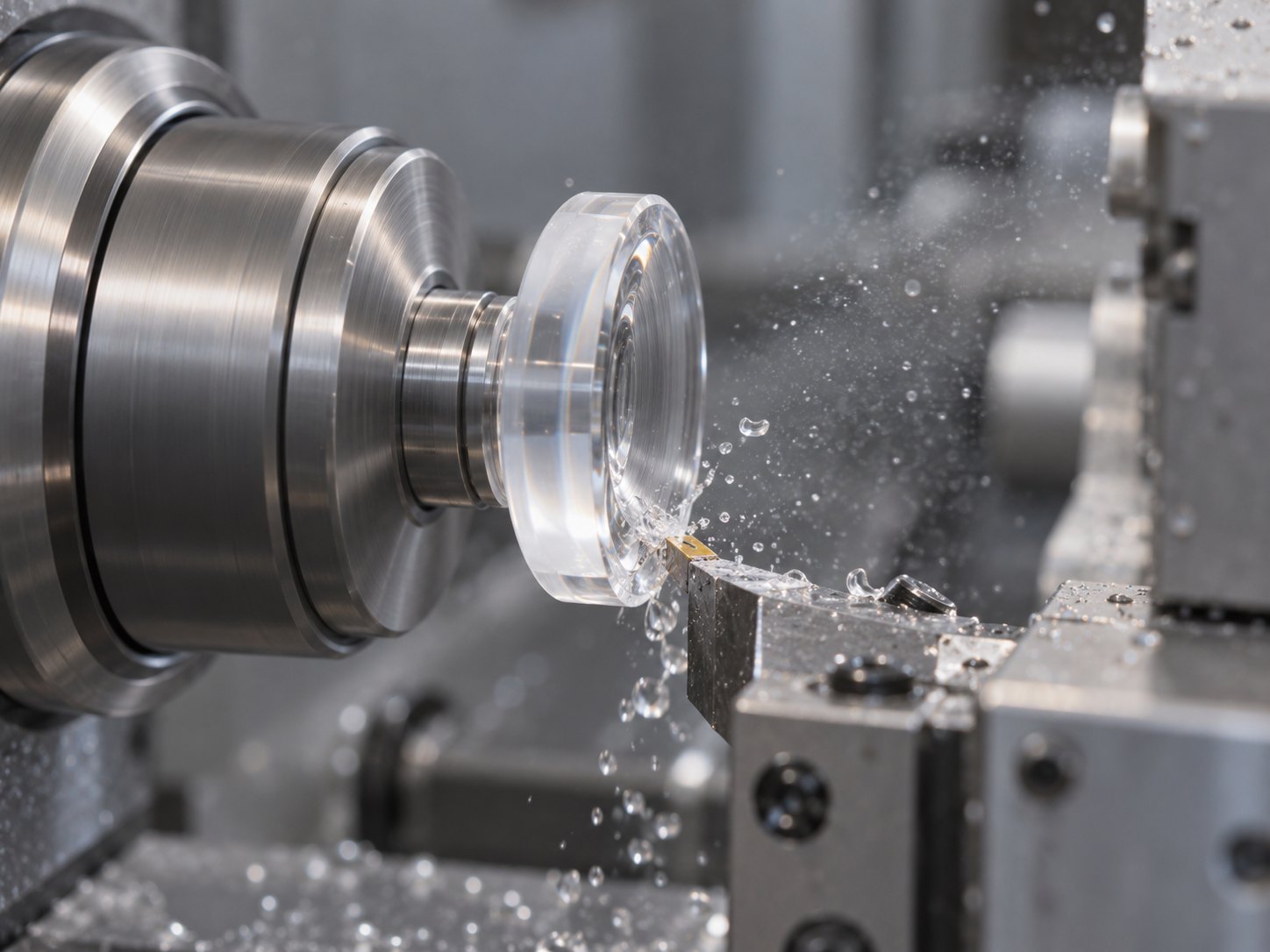
PMMA (polymethyl methacrylate, the same family as acrylic sheet) was the first plastic used for contact lenses. It is very clear, stable and easy to machine, but it lets almost no oxygen through, so the eye depends on tear exchange under the lens. Gas permeable materials have replaced it for contact lenses. PMMA is still used for some rigid intraocular lenses.
Intraocular lenses: acrylics, PMMA and silicone
Intraocular lenses (IOLs) replace the natural lens inside the eye, for example in cataract surgery. Most modern IOLs are foldable, so they can be inserted through a small incision. They are made of hydrophobic acrylic, hydrophilic acrylic or silicone; rigid IOLs are made of PMMA. Many acrylic and PMMA IOLs are lathe-cut and their haptics milled; silicone IOLs and some acrylic designs are molded. Our article how intraocular lenses are lathed explains the process.
How the material decides the way a lens is made
- Volume: high-volume soft lenses are molded; specialty and custom lenses are lathe-cut, often one lens for one eye.
- Rigid materials are lathe-cut directly to their optical surface.
- Hydrogels are lathe-cut dry and hydrated afterwards, so the design allows for the swell.
- Soft-at-room-temperature materials, such as some hydrophobic acrylics, are molded or lathed with the material cooled.
All lathe-cut lens materials are cut with a single crystal diamond tool, because the surface it leaves is the optical surface of the lens. See how contact lenses are made.
What Bulunmaz does
Bulunmaz makes single crystal diamond tools in natural diamond and MCD for lathing contact lenses and intraocular lenses: roughing and finishing tools, inserts and haptic milling cutters, made to fit your lathe, and resharpens them. We do not make lenses or lens materials. This article explains materials and manufacturing; it is not advice on which lens suits an eye. See our diamond tools for lathe-cut contact lenses and IOLs.
FAQ
- What are soft contact lenses made of?
- Soft lenses are made of hydrogels, water-absorbing polymers such as HEMA-based materials, or of silicone hydrogels, which combine a hydrogel with silicone to let much more oxygen through. Most soft lenses are cast-molded; custom soft lenses are lathe-cut while the material is still dry.
- What are rigid gas permeable lenses made of?
- Mostly fluorosilicone acrylates and silicone acrylates. The silicone lets oxygen pass through the lens, and the fluorine helps with wetting and deposits. These materials are lathe-cut from small buttons.
- Are hard contact lenses still made of PMMA?
- Rarely. PMMA was the first plastic contact lens material and is very clear and stable, but it lets almost no oxygen through. Gas permeable materials replaced it for contact lenses; PMMA is still used for some intraocular lenses.
- What does Dk mean on a lens material?
- Dk is a measure of how easily oxygen passes through a lens material. A higher Dk means more oxygen can reach the eye through a lens of the same thickness. It is one of the main numbers lens makers compare when choosing a material.
- What are intraocular lenses made of?
- Mainly acrylic: hydrophobic acrylic and hydrophilic acrylic for foldable lenses, PMMA for rigid lenses, and silicone for some foldable designs. Many acrylic and PMMA lenses are lathe-cut; others are molded.
- Which lens materials can be cut with a diamond tool?
- All the common lathe-cut lens materials: gas permeable acrylates, PMMA, dry hydrogel and silicone hydrogel blanks, and acrylic IOL materials. They are soft compared with metals, so a single crystal diamond edge lasts long on them.
Running a machine and need the tool for it? Send us the material, a drawing or photo and the finish you need.
Request a quoteArticles for lens laboratories
All articlesHow intraocular lenses are lathed: from blank to finished IOL
What polish-free lathing demands from the tool edge
How to specify a diamond tool: nose radius, rake angle, clearance and waviness
Resharpening single crystal diamond tools: when, how often, and what it costs
Which materials can be cut with a diamond tool, and why not steel
Request a quote
Tell us about your part
Send the lens material, the lens type (scleral, RGP, ortho-k, soft, IOL...), your lathe and a drawing or photo of your current tool. We'll suggest the right tool and send you a quote.
- Email: hello@bulunmaztools.com
- WhatsApp: +90 532 561 99 62